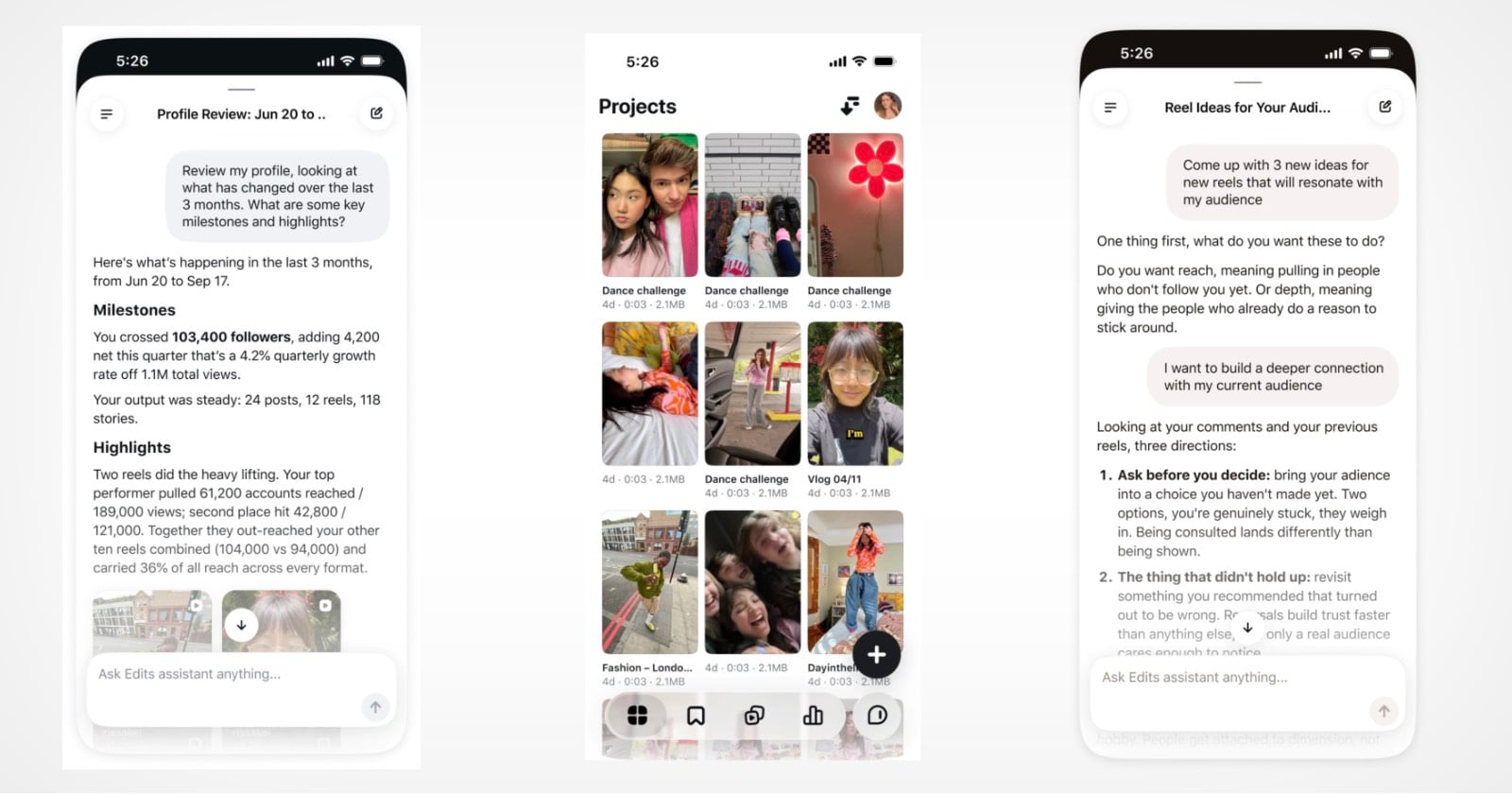
Instagram's new AI video assistant, which analyzes creators' Reels performance and suggests what to make next, is either a liberation or a trap, and we lean strongly toward the former, provided you approach it with the same curatorial instinct you bring to your feed. The tool promises to turn data into direction, offering recommendations based on what your audience has already responded to. That is useful, but only if you remember that the algorithm knows what worked yesterday, not what will surprise tomorrow. This is where our publication's recent coverage of Instagram's New Pixel Effect Curates the Art of the Soft Launch feels like a companion piece: both features invite you to shape a narrative, but the Pixel Effect lets you blur a relationship into mystery, while this assistant wants to sharpen your next move into a calculated bet. One is artful ambiguity; the other is predictive clarity. The tension between them is exactly where creative work lives.
For our readers, sophisticated, health-conscious, artistically inclined, the practical question is how to use this assistant without letting it replace your voice. The tool is not a director; it is a mirror. It shows you which Reels held attention, which angles sparked saves, which sounds resonated. The smartest response is to treat those insights as raw material, not prescription. If you are a photographer or model, consider how this might intersect with a project like the one described in Toronto's Next Lens: A Curated Call for Collaborative Portfolios. A collaborative portfolio is an act of trust and shared vision; an AI suggestion is a starting point. The two can coexist beautifully, use the data to identify which visual language your audience craves, then bring your own authenticity to the collaboration. That is the difference between repeating a formula and evolving a style.
But let's not ignore the risk. Algorithms reward consistency, and consistency can become a cage. If you follow every suggestion the assistant offers, your content may grow efficient but predictable. The most vibrant creators we admire, the ones who make fitness feel like art, who turn a morning run into a visual poem, do not optimize for engagement alone. They leave room for instinct, for the imperfect moment, for the shot that breaks the pattern. The assistant should be a collaborator, not a master. Use it to understand your audience's appetite, then serve them something they did not know they wanted.
The specific detail worth watching is how Instagram handles the assistant's suggestions over time. Will it learn to recommend risks, or will it double down on safe bets? That answer will determine whether this tool becomes a creative partner or a content mill. For now, our take is clear: embrace the data, but keep your own curatorial hand on the wheel.