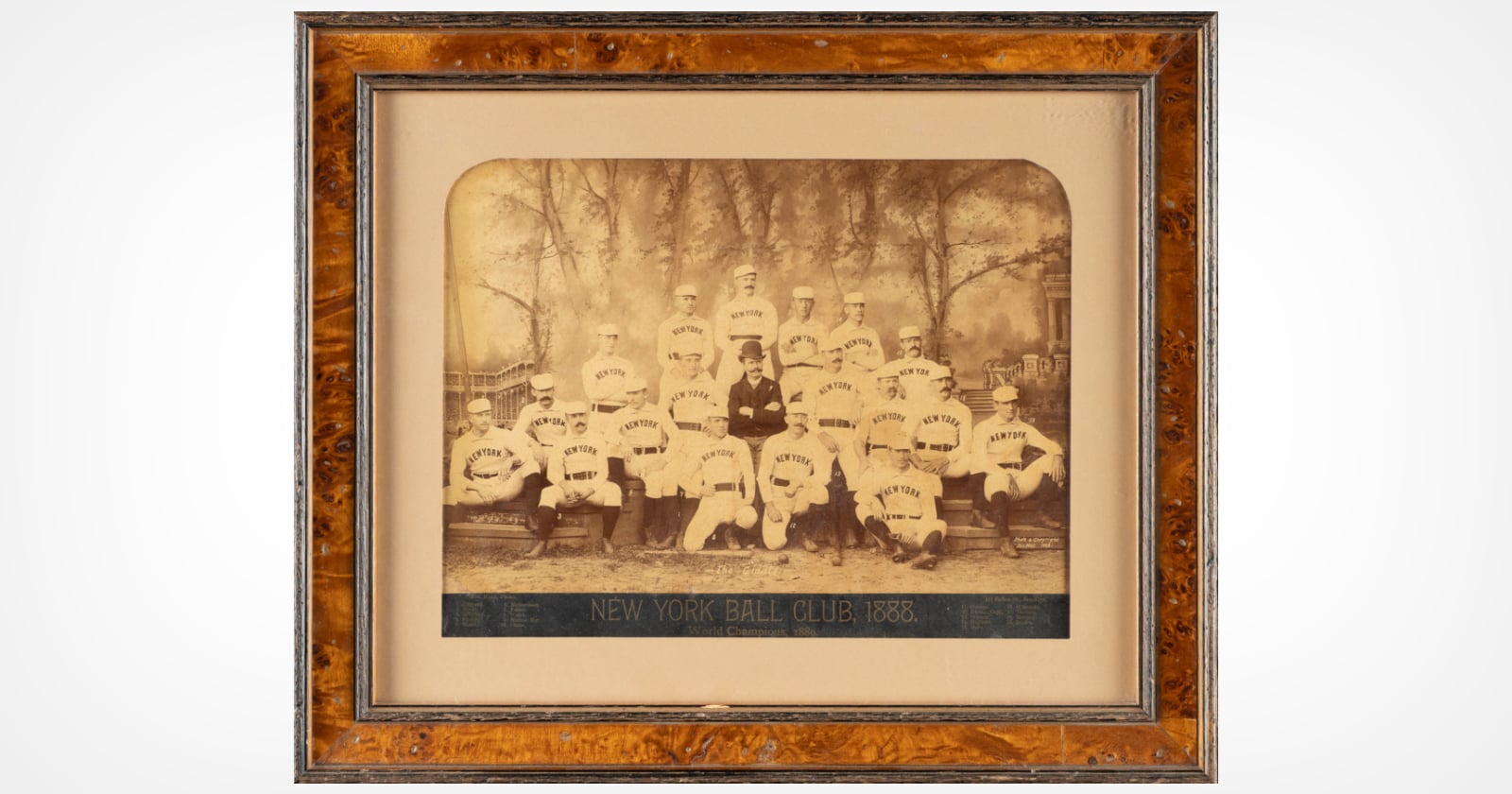
Some objects are more than collectibles, they are portals. The 1889 Giants cabinet photograph by Joseph Hall is one of them. This is not a baseball card or a mass-produced souvenir; it is a curated relic of a sport that was still inventing itself, captured by a photographer who understood that light and shadow could elevate a team portrait into art. For our readers, who move between the worlds of fitness, fashion, and visual culture, this auction offers a rare chance to own a piece of authenticity, something that no algorithm can generate and no retouching can improve.
The photograph arrives at a moment when the line between the real and the manufactured has never been more blurred. Just last month, The New York Times Bans AI Retouching, Choosing Authenticity Over Algorithms, a decision that signals a growing hunger for images made by human hands and human eyes. Joseph Hall's work belongs to that tradition. He did not have the luxury of infinite edits or generative fills. He had a large-format camera, a glass plate, and a sensibility that turned a team of athletes into a composition of dignity and grit. Compare that to the sleek, one-click efficiency of Coman's T1 Mini Tripod Nears $400K in a Crowdfunded Celebration of Design, a triumph of modern engineering that makes photography easier, but also more disposable. The 1889 Giants photo reminds us that the best images are not the easiest ones; they are the ones that demand a relationship between the photographer, the subject, and the moment.
What makes this photograph truly immersive is not its age but its honesty. The players stare into Hall's lens with a directness that feels foreign to our era of curated Instagram feeds and carefully staged candids. They are not performing for likes. They are present. In an age where we are constantly Rethinking Direct Flash and chasing the perfect artificial glow, Hall's natural light and unadorned composition feel radical. He had no need to hide or soften. The result is a portrait that speaks to our own pursuit of authenticity, in our workouts, our wardrobes, and our creative work. This photograph is not just a sports artifact; it is a lesson in the power of seeing clearly.
The practical takeaway for our audience is this: when you invest in objects like this, you are not just buying history. You are choosing to surround yourself with things that demand your attention rather than passively consume it. The 1889 Giants photograph will not swipe, scroll, or optimize itself for an algorithm. It will sit in a frame, in a room, and ask you to look. The question is whether we are willing to look back.