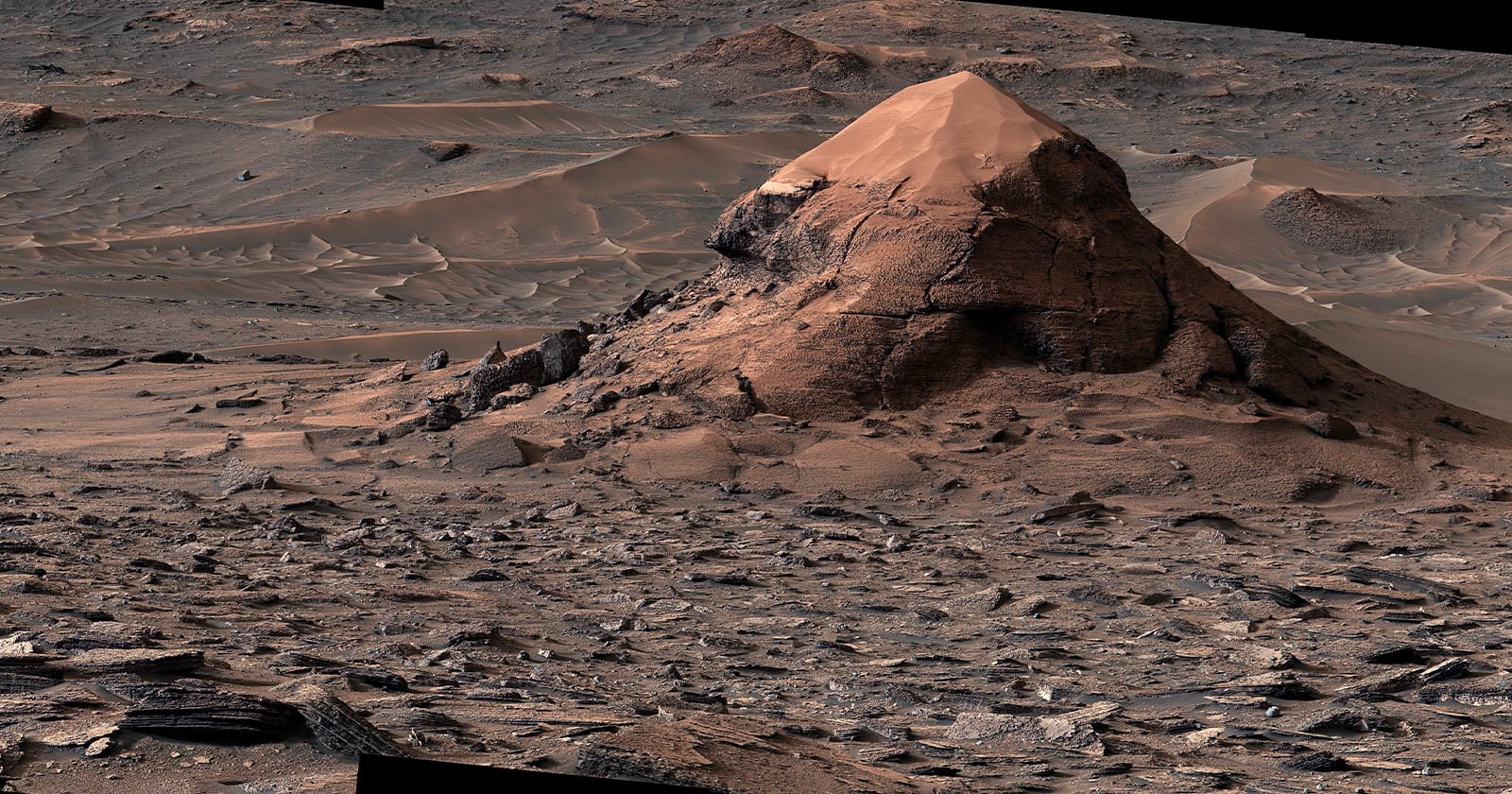
There is something quietly profound about a machine, rolling across a foreign world 140 million miles away, pausing to frame a butte against a rust-colored sky. We call it a landscape photographer, this rover, but the title undersells the poetry of its work. The image it sent back, a conical rock formation rising from a field of scattered stones and wind-swept sand dunes, isn't just data. It's a reminder that beauty doesn't require an audience to exist, only a witness to be shared. At its core, this is what draws us to the frame: the intersection of technical precision and raw, unfiltered wonder.
We often think of photography as a human endeavor, a way to hold onto moments that slip through our fingers. But here, the camera is an extension of a machine's mechanical arm, and the "photographer" is a set of algorithms navigating a crater's rim. A Descent Into Darkness: Witnessing the Chilean Mine Rescue captured a different kind of isolation, where human endurance was tested half a mile beneath the Earth's surface, and the images that emerged were fraught with the weight of survival. This Martian vista carries a lighter burden, yet it shares that same thread of vulnerability, the sense that we are peering into a place we weren't designed to see, and we're better for it.
For our readers, the takeaway isn't about the science, though that's impressive. It's about the act of looking closer. The butte is just a rock, but the way it catches the light, the way it stands alone in that vast, empty expanse, forces a pause. It's a lesson in composition that translates directly to your own work, whether you're shooting a portrait in a studio or a landscape in your backyard. Cultivating Connection: Creating Comfortable Portrait Experiences teaches us that the best images come from making a subject feel seen, not just captured. The rover does that by default, it has no intent, no agenda, just a directive to document. And yet, the result feels intentional, curated even, as if the universe itself arranged those stones for maximum effect.
What strikes us most is the patience this represents. The rover didn't rush. It trundled, it climbed, it waited for the right moment. In an age where we expect everything instantly, this is a quiet rebuke. The image is a reminder that the best shots often come to those who are willing to sit with the discomfort of the unknown. Celestial Visions: A Nebula's Beauty Wins Astronomy Photographer of the Year shows us what's possible when we point our lenses outward, but this butte asks us to consider the ground beneath our feet, or the ground that exists elsewhere, waiting for a machine to notice it. The question we're left with isn't whether the rover will find something new, but whether we'll remember to slow down enough to appreciate the next frame it sends home.