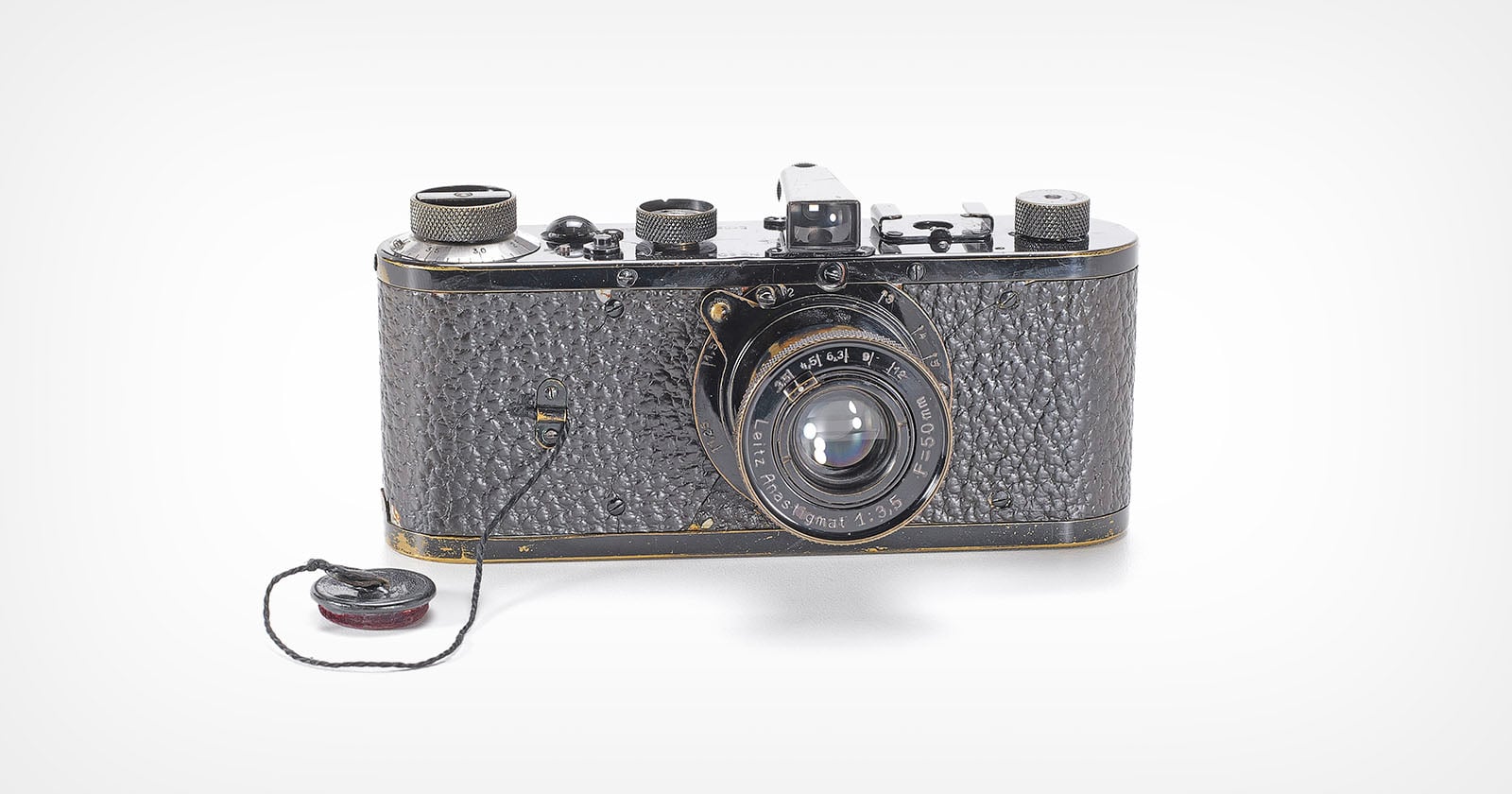
A nearly century-old Leica 0-Series prototype just sold for €4.25 million, and we think that price tag says less about cameras and more about what we, as a culture, are hungry to hold onto. This isn't a story about gear; it's a story about proof, the kind of tangible, human-made proof that feels increasingly rare in an age of infinite digital reproduction. For our readers, the takeaway is practical: authenticity has a value that no algorithm can replicate, and that value only grows as our world becomes more synthetic.
Consider what that 1923 prototype represents. It's not just a camera; it's the moment before mass production, a hand-finished object that preceded the very idea of a Leica as we know it. Someone, nearly a century ago, held this metal and glass in their hands and made a choice about how to build something new. That physical trace, the slight asymmetries, the wear, the specific history of a single object, is exactly what we've been circling in our own coverage of The Art of Proving What's Real in a World of AI-Generated Images. The auction result is a direct answer to that question: when anyone can generate a flawless image of a vintage camera on a screen, the actual object becomes more precious, not less. The market is paying for the un-fakeable.
This also reframes how we talk about the tools we love. We recently wrote about Two decades of soul: why the Canon EF 50mm F1.2 still captivates, and that lens's enduring appeal shares DNA with this Leica's astronomical sale. Both are about character over perfection. The Canon 50mm isn't the sharpest or most technically advanced lens you can buy today, but it has a rendering, a warmth, a personality that persists across decades. The Leica prototype takes that logic to its extreme: it's not even a production lens, yet its imperfections and rarity are precisely what make it transcendent. For photographers, the lesson is to stop chasing the spec sheet and start paying attention to what an instrument *feels* like, because that feeling is what outlives every firmware update.
What does this mean for you, practically? If you're a collector, this sale resets the ceiling for what early photographic artifacts can fetch, expect more prototypes and pre-production pieces to surface in the coming years. If you're a working photographer, it's a reminder that your craft is rooted in physicality, in the weight of a body and the click of a shutter, even as When the Zoom Gets Real: Optical Clarity Over Digital Noise pushes us toward ever-cleaner digital output. The one detail we'll be watching: whether this sale prompts other major auction houses to dig deeper into their archival holdings, hunting for more "zero-series" objects that were once dismissed as mere stepping stones. Because if a single prototype can command $4.75 million, the next one might not even make it to public auction, it will be quietly negotiated between two private collectors who understand that the real currency here isn't money. It's the ability to say, with absolute certainty, that this object is the one.