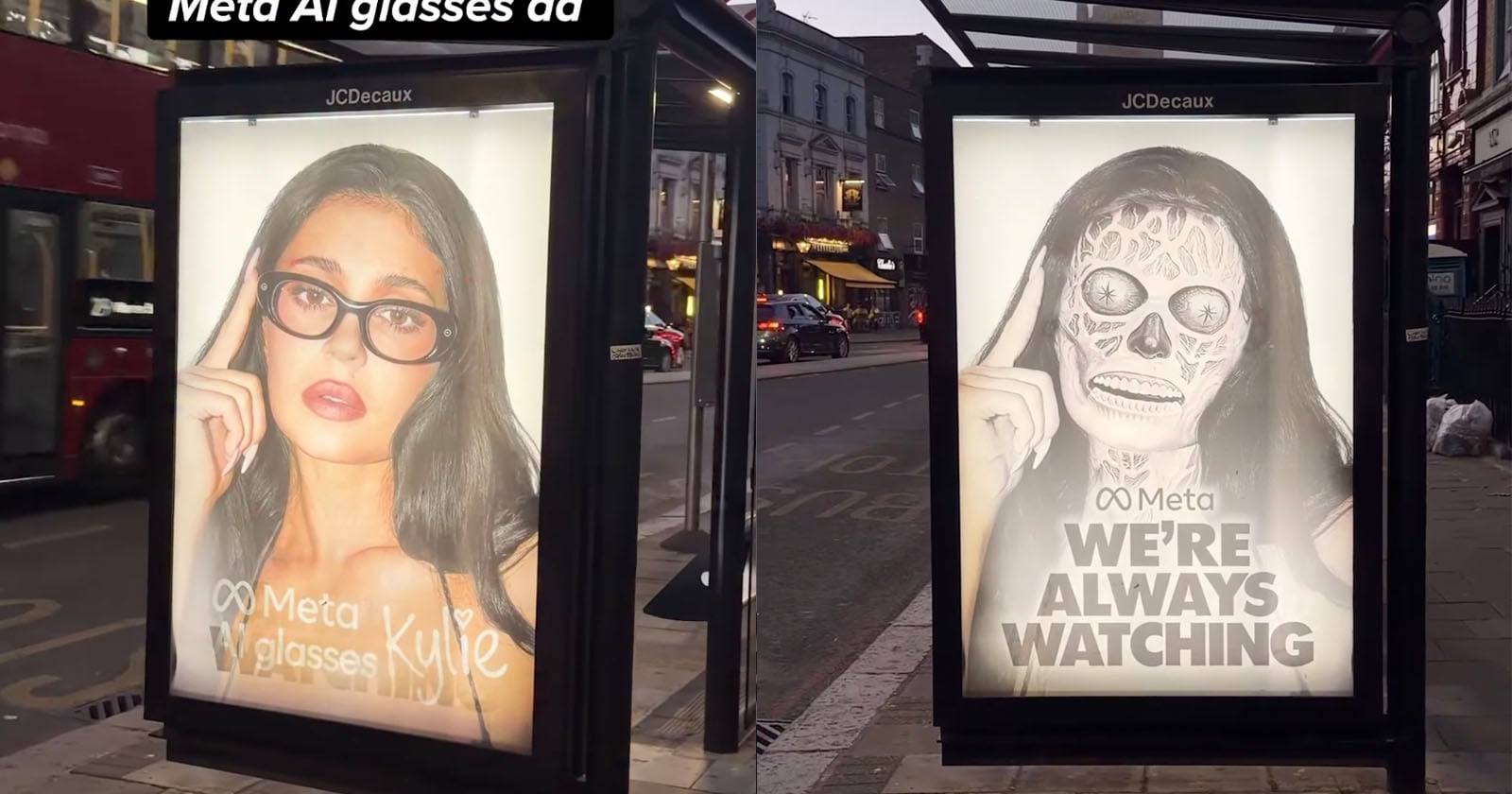
An activist collective just turned a London bus stop into a mirror, and the reflection is pointed. The spoof ad swaps Kylie Jenner's polished Meta smart glasses campaign for a defaced visage, complete with skull makeup and the message that Meta is always watching. It is a clever piece of guerrilla art, a lenticular jab that forces a double take. We are not surprised, but we are engaged. The gesture is a reminder that the tools we invite into our creative and personal lives do not arrive neutral. They come with terms, conditions, and a camera pointed at the world. This is where art imitates tech, and the critique lands because it borrows the visual language of the very campaign it mocks.
This subvertisement sits in a curious tension with the broader creative landscape we cover. We recently wrote about how Unlock Creative Power: Lightroom and Photoshop Now Within Gemini brings professional editing tools into an AI platform, a move that promises efficiency but also raises quiet questions about authorship and control. Then there is the story of an Aspirational Image, Unexpected Exit: CEO Departs After AI Photo, where a leader's AI-edited post backfired in a very public way. And we have explored how an AI-Powered Telescope Transforms Smartphone Bird Photography, expanding what a casual observer can capture. The thread here is not anti-technology sentiment; it is about the gap between what these tools promise and how they actually operate in the wild. The bus stop protest is a blunt, effective footnote to that ongoing conversation.
Our honest take is that the activists are not Luddites, and they are not wrong. They are using the language of the campaign to expose its underbelly. The practical lesson for our readers, who value both form and function, is to stay alert to the trade-offs embedded in the devices they adopt. Meta's smart glasses are not just a photography gadget; they are a social experiment with a privacy cost. When you wear them, you are not merely capturing moments, you are inviting a corporate eye into every glance. The spoof is effective because it does not scream; it suggests. It lets the viewer connect the dots between the glossy ad and the gritty reality of surveillance.
What we would tell a reader who asks about this is simple: pay attention to the small print, but also pay attention to the art. This is not a call to abandon the tools, but a nudge to wield them with intention. The specific detail to watch is how Meta responds. Will they lean into the parody, or will they scrub it from the streets? Their reaction will tell you more about their values than any product launch. For now, the bus stop stands as a reminder that the most interesting commentary often comes from outside the boardroom. The concrete point to carry forward is this: the next time you see a flawless ad for a wearable device, ask yourself who is actually wearing whom. The answer might be staring right back at you.