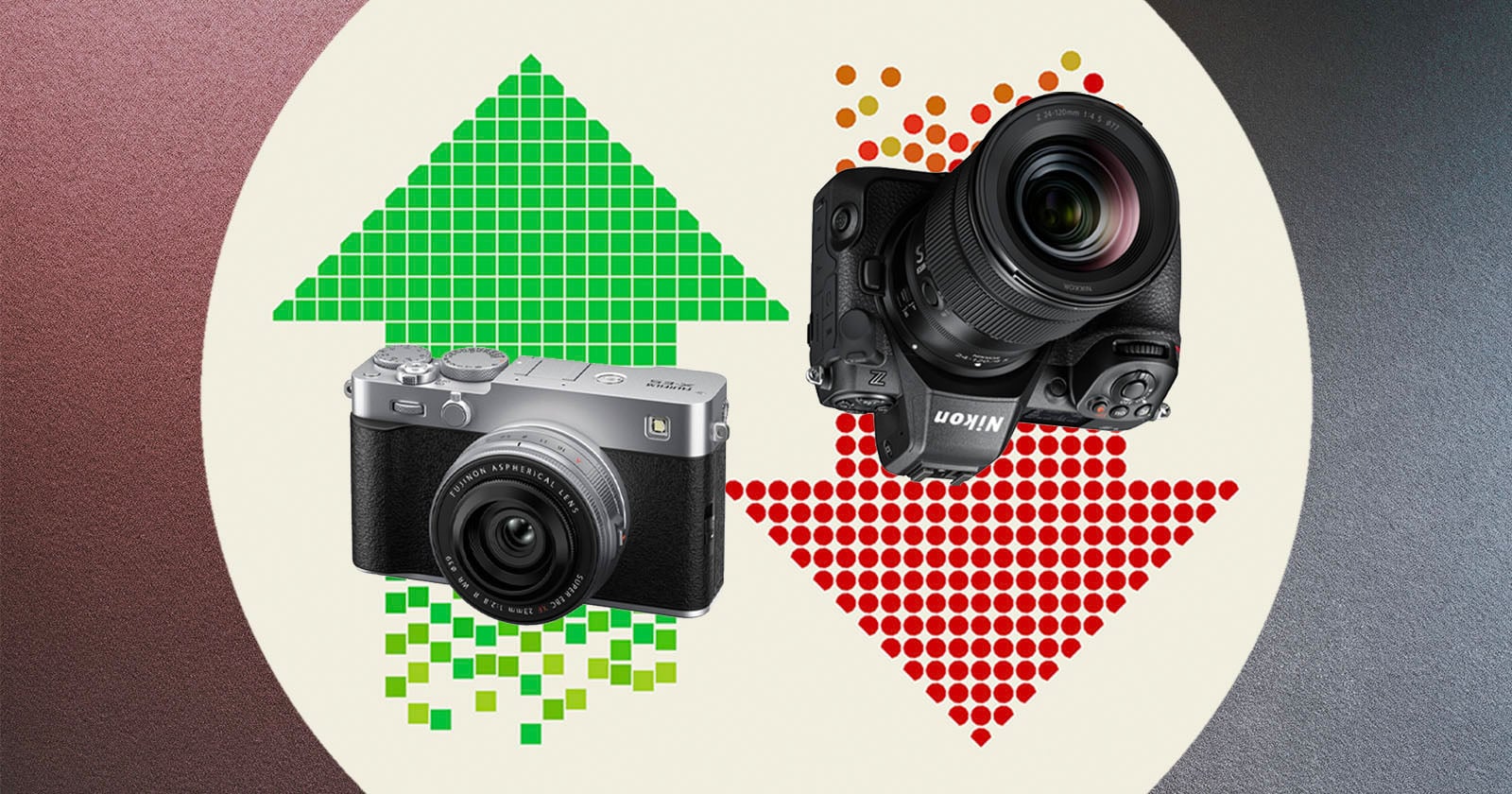
The camera world loves a good narrative, especially one with a tidy visual like a red arrow pointing down at Nikon and a green one pointing up at Fujifilm. The Nikkei Industry Map's recent reshuffling sent a familiar jolt through the rumor mills, but as our sibling analysis points out, the data was misleading. It is a story about perception versus the messy reality of market share, and it is worth slowing down for a moment to untangle the nuance before we all start eulogizing an iconic brand.
We get it, though. In an era of instant hot takes, the idea that Fujifilm has "jumped ahead" is a satisfying headline. It fits a narrative of the plucky underdog finally getting its due. But the numbers tell a more complex tale, one that has less to do with who is winning the mirrorless war and more to do with how we measure the battlefield itself. The categories are shifting under our feet, and the rankings are struggling to keep pace. For the working photographer, this is not just an abstract data point. It is a reminder that the tools you choose are about your specific needs, not the quarterly earnings of a conglomerate. The same spirit of discernment applies to how you approach your own creative work, whether you are chasing the perfect astrophotography shot with a high-ISO sensor or collaborating on a boudoir session where the light is all about intimacy and trust.
What the rankings miss is the qualitative difference in how these brands are showing up. Nikon's recent moves, like the new Z5 IIC and the surge of third-party accessories from companies like SmallRig, suggest a company deeply invested in a system's longevity and ergonomic practicality. That is a tangible, grounded form of innovation. Meanwhile, Fujifilm's ascent is often fueled by a distinct aesthetic and a cult-like following that values the feel of a camera as much as its specs. This is precisely why we love covering the ecosystem from the ground up, from the practical Unlock the Nikon Z5 IIC’s Potential with SmallRig’s New Accessories to the artistic pursuit of Capturing Cosmic Beauty: An Astrophotography Journey with Nikon. These stories are not about rankings; they are about the quiet, dedicated work of making images that matter.
So, what do we tell a reader who asks if they should be worried about Nikon's future? We would say to look at the actual gear in your hands and the community around it. A position on a chart does not make a bad photo, nor does it make a good lens less sharp. The conversation should pivot from "who is number three" to "who is building the best tool for your specific vision?" That is a far more vibrant and authentic question. We would point them toward the collaborative spirit seen in projects like Collaborate & Create: Boudoir Sessions Offered Across Florida's Coast, where the choice of gear is secondary to the connection it facilitates. The real metric is not market share; it is the sheer volume of diverse, compelling work being produced, and on that front, both Nikon and Fujifilm are wildly successful.
The final takeaway here is not a warning, but a call for focus. The next time a headline screams about a position shift, we encourage you to ask *what is being measured* and, more importantly, *what is being missed*. The most relevant detail to watch is not the next quarterly report, but the next major firmware update or lens roadmap that tells you where the company is investing for the long haul. That, not a spot on a map, is the true compass for your next creative investment.