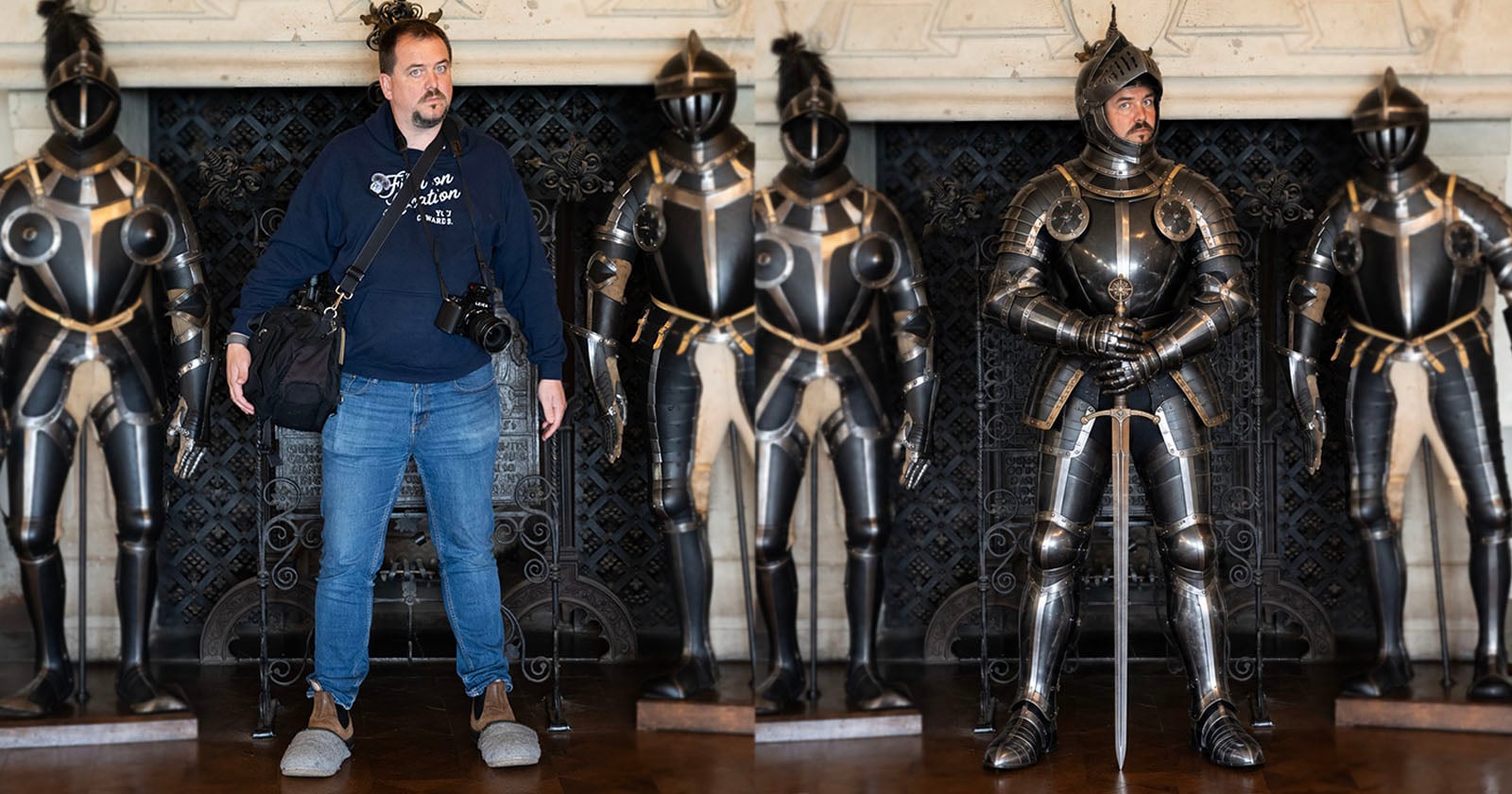
There is a particular magic in watching a machine hand you a mirror, only to find it's been polished into a suit of armor. ChatGPT's updated image generator, which promises to be more faithful to source photos, has turned a simple portrait of Jordan Drake into a study in transformation. The split-screen is telling: on one side, a man in casual clothing stands between two suits of armor; on the other, he wears the metal as if he were born to it. What feels remarkable is not the novelty of the effect, but the fidelity of the translation. This is no longer a crude swap or a cartoonish approximation. It is a conversation between the subject's essence and the algorithm's interpretation, and for the first time, the algorithm seems to be listening.
For our audience, this is not just a toy for weekend tinkering. It is a quiet shift in how we approach the visual craft. We have spent years curating worlds where fitness meets art, where the human form is both canvas and sculpture. Tools like this do not replace the eye; they extend it. When we look at Refined and Accessible: The Nikon Z5 IIC—A Full-Frame Camera, Reimagined, we see a device that rewards patience and precision. The same can be said here, albeit in a different key. The camera captures what is real; this generator asks what could be real, then dresses it in light and shadow. And when we consider Unlock Creative Power: Lightroom and Photoshop Now Within Gemini, the trajectory becomes clearer. The tools are not just getting smarter; they are getting more intimate with our intentions. They are learning to ask, "Is this what you meant?" rather than simply executing a command.
Our honest take is this: the promise of faithfulness is the most exciting and most fragile part of the update. Faithful to a source photo is not the same as faithful to a vision. The former is technical; the latter is emotional. What we would tell a reader who asked us about this is to lean into the constraint. Use the source image as a foundation, not a cage. The real artistry emerges when you push against the fidelity, when you ask the model to bend the light just past reality, to make the armor feel heavier or the gaze more distant. The tool is a collaborator, but it still needs a director. And in that sense, nothing has changed. The best work has always come from a clear voice, whether the brush is held by a hand or a prompt.
The practical consequence for our readers is a new threshold for experimentation. You no longer need a full studio, a costume designer, or even a rented suit of armor to see yourself as a knight. You need a clear photo, a curious mind, and the willingness to ask for something slightly impossible. The open question is whether this fidelity will scale beyond portraits, beyond knights, into the more subtle territory of mood and atmosphere. We are watching for that. Because if the machine can honor a face, it might one day honor a feeling, and that is where the real transformation begins.