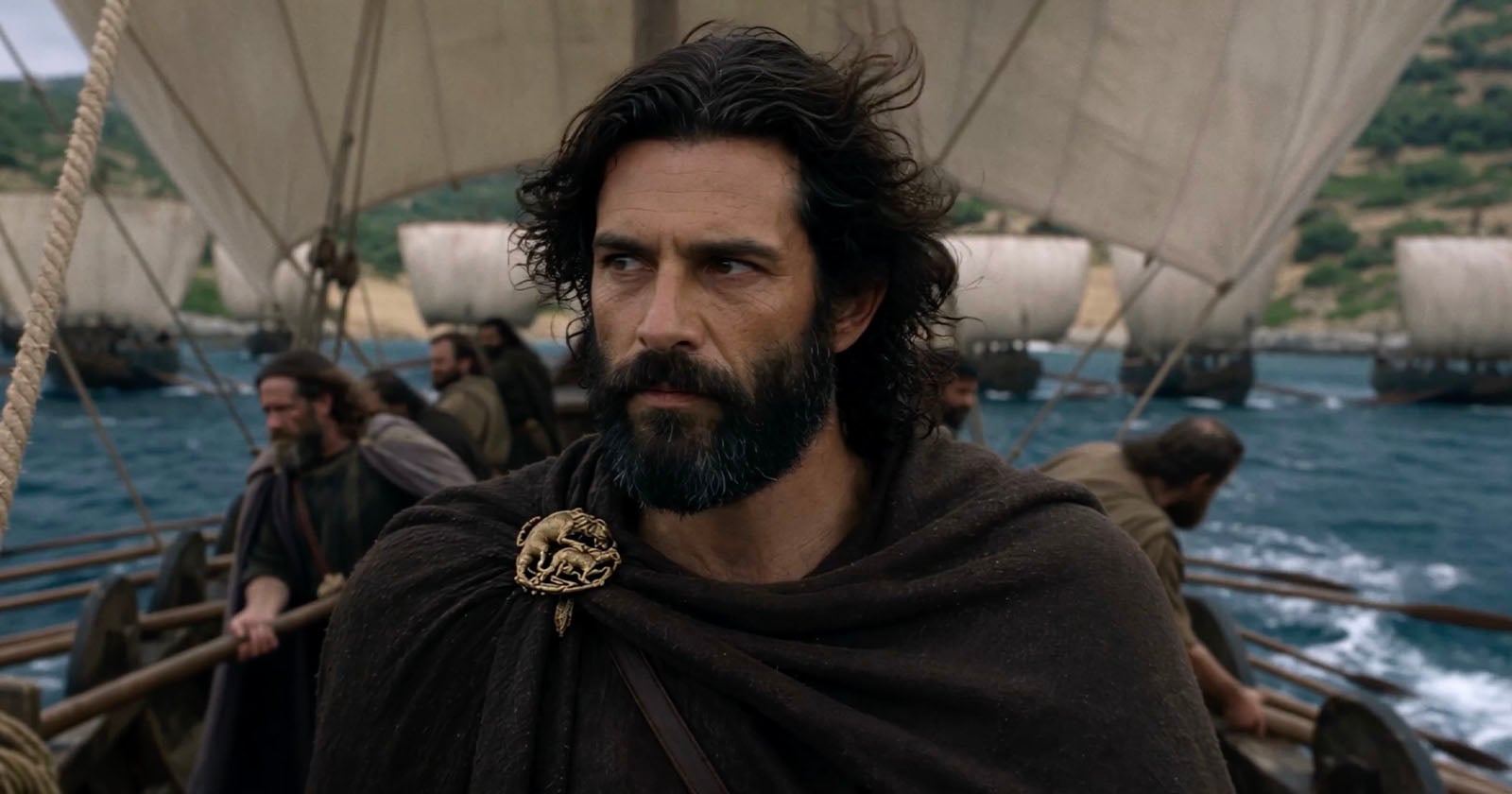
There is something deeply telling about watching a billionaire decide that the most enduring epic of Western literature needs a machine-made remake simply because a rival's adaptation is succeeding. Elon Musk's announcement that Grok would produce an AI-generated feature-length version of *The Odyssey*, and has now "sort of" followed through, feels less like artistic ambition and more like a tantrum dressed up as innovation. Christopher Nolan's upcoming *The Odyssey* clearly struck a nerve, and Musk's response is to bypass human craft entirely, insisting that code can do what Homer did. It is a move that confuses scale with soul, and output with art.
This is not the first time we have watched algorithms stumble into creative spaces with clumsy results. Just Eat recently found itself apologizing after AI-generated menu photos produced a nauseating image of bacon-floating soda, a failure that When AI Gets Creative: Bacon-Floating Soda Breaks Just Eat's Reality captured in all its grotesque detail. And xAI itself has been busy elsewhere: the company successfully blocked a Minnesota ban on unauthorized digital intimacy tools, a story explored in When Art Meets Algorithm: xAI Blocks a Ban on Unauthorized Digital Intimacy. The connecting thread here is a particular philosophy: that any creative territory, from a sacred epic to a menu photo to a person's image, can be flattened into data, processed, and output without the messy friction of human intention.
What makes this *Odyssey* project so revealing is its motivation. This is not an artist asking, *What can AI reveal about a timeless story?* It is a competitor pouting, *If Nolan can do it, so can my machine.* The result, by all accounts, is a video that exists but feels hollow, a technical proof that misses the entire point of why *The Odyssey* endures. The epic's power lies in its polyphonic layers: grief, cunning, longing, violence, homecoming. An AI can generate images of Cyclopses and sirens at remarkable speed, but it cannot *choose* to include the ache of a wife weaving and unweaving a shroud, or the raw terror of a man who has forgotten his own name. Those decisions require a human who has lived, loved, and lost.
For our readers, those who move between studios and studios, who curate their lives with intention, the practical takeaway is sharp. The art you choose to engage with, the brands you support, the experiences you seek out, they all reflect a fundamental choice: do you value the machine's speed or the human's vision? The Hidden Mother photographs, those early daguerreotypes where mothers hid beneath drapes to hold their children still for the long exposure, remind us that even the most technical artistic process was once a deeply human act of restraint and care. The Art of Veiled Devotion: Uncovering the Hidden Mother in Early Photography shows us a past where technology served intimacy. Grok's *Odyssey* inverts that: technology serves ego.
Watch what Grok's version actually looks like when it lands. If it is a kaleidoscope of slick CGI with no narrative spine, we will have our answer. If it somehow surprises us with genuine pathos, then perhaps the code has learned something humans took centuries to discover. Either way, the question is no longer whether AI can make art. It can. The question is whether we will mistake the imitation for the real thing, and whether we care enough to tell the difference.