James Webb Space Telescope Opens Up a Cosmic Treasure Chest
Our take
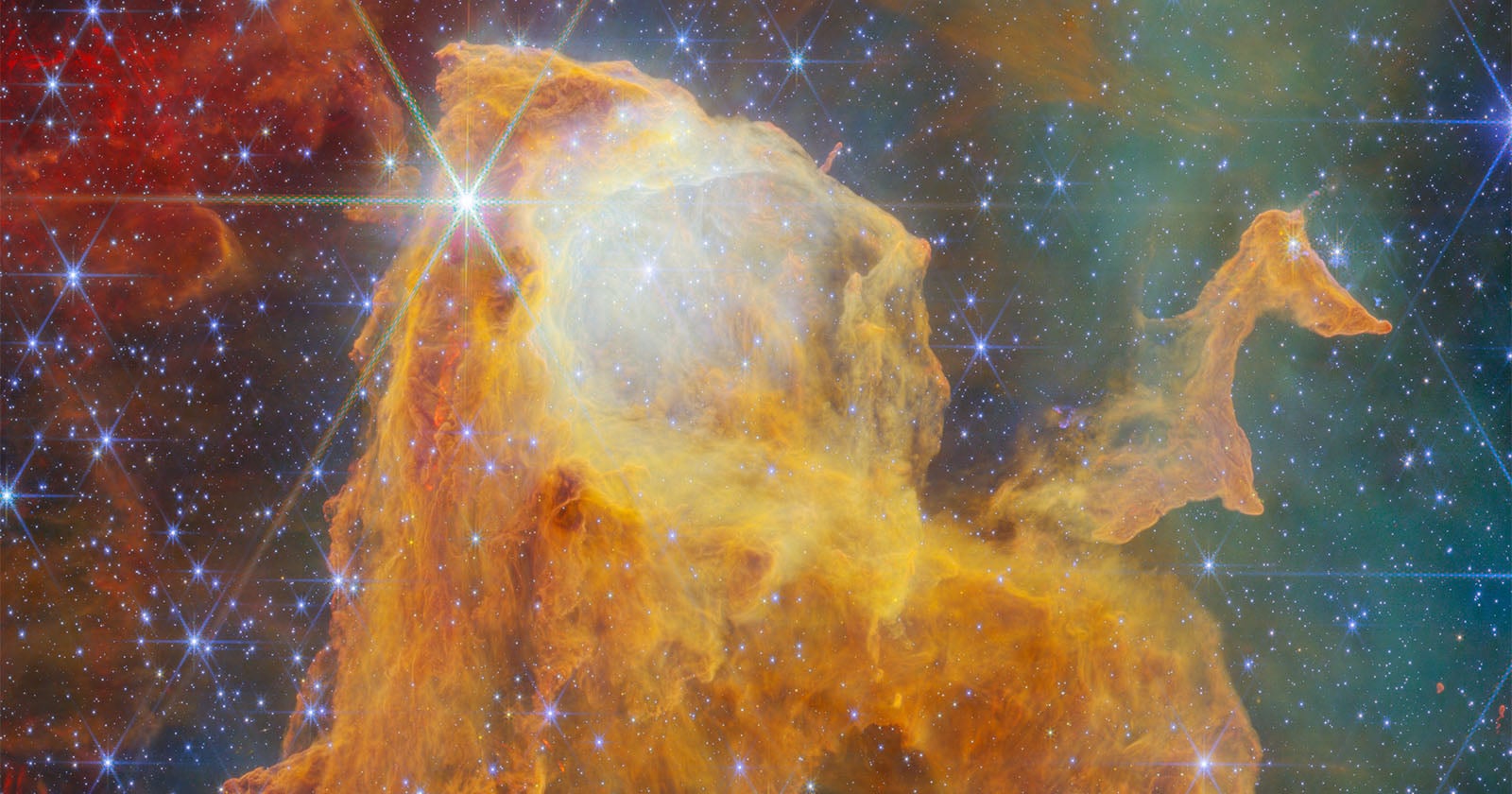
The unveiling of the James Webb Space Telescope’s latest image, dubbed the "Cosmic Treasure Chest" within the Carina Nebula, isn't merely a beautiful photograph; it’s a profound testament to the evolving capabilities of human observation and a window into the very nurseries of stars. Located a relatively close 7,500 light-years away, the Carina Nebula has been studied before, but never with this level of detail and clarity. Webb’s infrared capabilities pierce through the obscuring dust clouds, revealing intricate structures and processes previously hidden from view. This mirrors the recent advancements showcased in [The Most Detailed Photos Ever of the Sun’s Surface], demonstrating a broader trend of unprecedented resolution across various astronomical fields. Similarly, the remarkable detail captured by astronaut Don Pettit, as highlighted in [Don Pettit’s Staggering Photo Confounds Skeptics], underscores the power of observational tools and the awe they inspire.
The significance of the “Treasure Chest” image extends far beyond its aesthetic appeal. The Carina Nebula is a stellar nursery, a region where new stars are actively being born. Webb's observations allow astronomers to study the formation of these stars in unprecedented detail, shedding light on the complex interplay of gas, dust, and radiation that governs this process. The vibrant orange and yellow hues aren’t just visually striking; they represent different temperatures and densities of gas, influenced by the intense energy emitted by the newborn stars. Understanding these dynamics is crucial for refining our models of star formation and ultimately, understanding our own solar system’s origins. The image’s clarity also allows for the identification of protostars – stars in their earliest stages of formation – providing invaluable data points for comparative studies. We can even draw parallels to the unexpected beauty found in seemingly simple imagery, like the surprisingly compelling grainy photo of Earth captured on Mars, presented in [This Grainy Photo of Earth Captured on Mars Is Way Cooler Than It Looks], reminding us that profound insights can emerge from unexpected sources.
The James Webb Space Telescope represents a paradigm shift in astronomical observation. Unlike its predecessor, the Hubble Space Telescope, which primarily observed in visible and ultraviolet light, Webb is optimized for infrared wavelengths. This is essential for peering through the dense clouds of dust and gas that obscure many celestial objects. The resulting images aren't just sharper; they reveal entirely new aspects of the universe. This ability to penetrate cosmic veils is revolutionizing our understanding of everything from the early universe to the formation of galaxies and planetary systems. Furthermore, the collaborative nature of the project – a joint venture between NASA, ESA, and CSA – exemplifies the power of international cooperation in advancing scientific knowledge. The precision and data generated by Webb are poised to fuel decades of research and inspire a new generation of astronomers and space explorers.
Looking ahead, the continued observations from the James Webb Space Telescope promise to unlock even more secrets of the cosmos. Will we finally be able to definitively determine the age of the earliest galaxies? Can we use Webb's data to identify potentially habitable exoplanets with greater accuracy? The “Cosmic Treasure Chest” image serves as a tantalizing preview of the discoveries to come, reminding us that the universe is a vast and endlessly fascinating place, and we are only just beginning to explore its wonders. The question now isn’t *if* Webb will make groundbreaking discoveries, but *what* those discoveries will be, and how they will reshape our understanding of our place in the universe.
The newest NASA/ESA/CSA James Webb Space Telescope Picture of the Month delivers a spectacularly colorful look at a cosmic "Treasure Chest," a neat feature of the nearby Carina Nebula, located just 7,500 light-years away.
Read on the original site
Open the publisher's page for the full experience