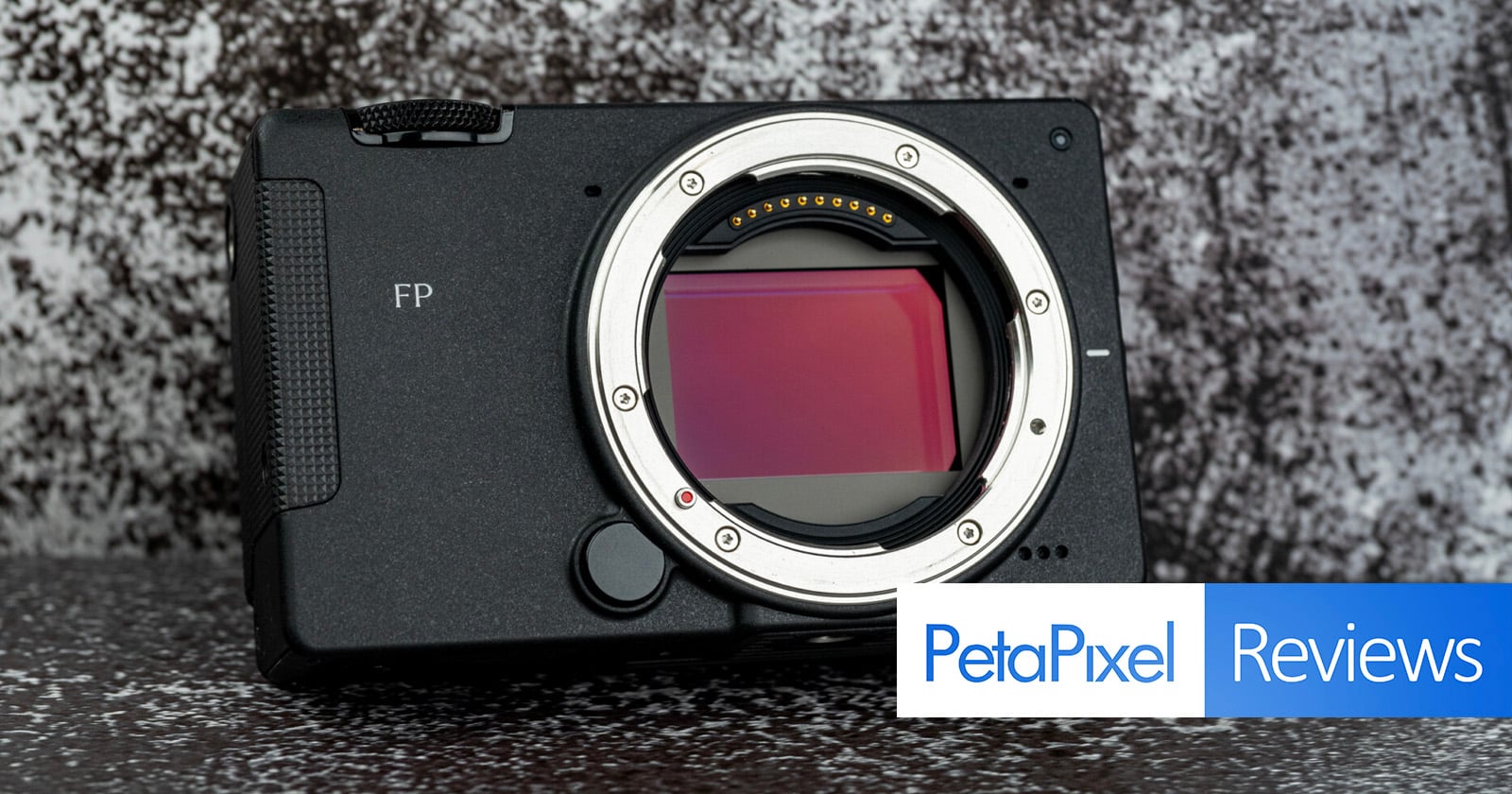
There is a quiet, almost stubborn brilliance in Sigma's optical engineering, and a corresponding, equally stubborn frustration in the bodies they build around those lenses. The latest FP2 arrives as yet another testament to this dissonance, a camera that, on paper, should be a dream for the discerning creative, yet in practice feels like an argument with the very idea of a comfortable grip. We have long admired the glass, but the chassis have consistently felt like experiments in form over function, and the FP2 does not entirely break that pattern.
For the photographer who values artistry and intends to work slowly, deliberately, the FP2's modular, stripped-back design might offer a certain Spartan allure. But for the majority of us, those who shoot in the field, who need intuitive menus and a body that disappears into the hand rather than fights it, this camera presents a familiar conundrum. It is a tool that demands you adapt to its logic, not the other way around. This is a stark contrast to the approach we saw in The Lifespan of a Fujifilm Camera, Through an Artist's Eye, where design feels like an extension of the photographer's instinct. The FP2, by comparison, feels like a conversation you have to initiate on its terms.
What makes this relationship so particular is that Sigma's risk-taking is not born of carelessness. It is a deliberate pursuit of a specific, uncompromising vision, one that prizes modularity and raw sensor performance over the comforting familiarity of a traditional camera body. There is an artistic integrity there, a refusal to be ordinary. Yet that same integrity can lead to a shooting experience that feels perplexing, as if the camera is more interested in being a statement piece than a reliable partner. It raises a practical question for the studio artist or the location shooter: how much friction are you willing to accept for the sake of a unique image? That same tension between intention and execution was central to Inside the Studio Where Design Meets the Soul of a Camera, where the soul of a camera is carefully balanced with its usability. The FP2 seems to tip that balance heavily toward the soul.
The specific takeaway here is a simple, hard truth: if you are a Sigma lens devotee hoping the FP2 will finally be the body that clicks, prepare for a familiar struggle. The ergonomics remain unconventional, the menus rigid, and the shooting experience more of a curated challenge than a seamless flow. For those who find joy in that challenge, who see the grip as a constraint to be mastered rather than a flaw, this camera will be a fascinating tool. For everyone else, the lenses remain the love story, and the body is still the footnote. Watch for how the community adapts to its quirks; that adaptation, or lack thereof, will tell us whether Sigma's vision has finally found its audience, or if it remains a beautiful idea that never quite fits in hand.