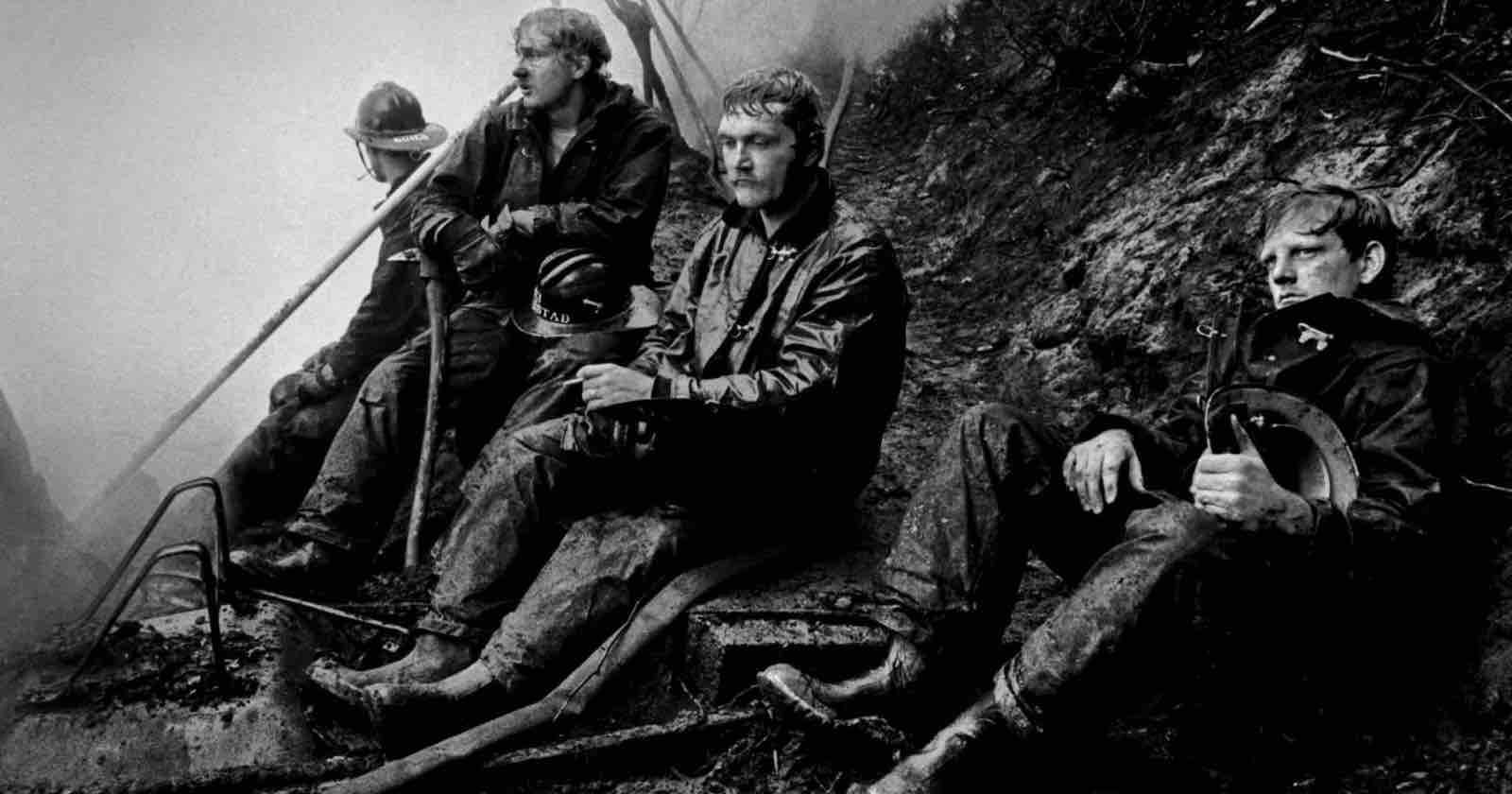
We see the frame differently now. Jerry Gay's Pulitzer-winning photograph of four firemen resting after a house fire was never just an image of exhaustion. It was a composition in dignity, men bowed but not broken, smoke still curling behind them, the ordinary weight of service made immortal. And then there were his other frames: the ones of Ted Bundy in a courtroom, handsome and hollow, a face that would come to define the banality of evil. Gay captured both ends of that spectrum, and his passing leaves us with a quiet but urgent question: what does it mean to hold a lens steady in moments of profound humanity and profound horror?
For our readership, who move between worlds of Crafting Clarity: New Filters Solve the Mission 1 Pro's Focus Flaw and a vintage soul meets modern innovation in Sigma's bold new lens, Gay's career offers a stark reminder that the best gear is only as meaningful as the eye behind it. We obsess over sharpness, over focal length, over the perfect filter for that documentary close-up. Gay used a camera that would be considered primitive today. And yet his firemen rest in our collective memory not because of sensor resolution or chromatic aberration correction, but because he knew when to press the shutter. That instinct, the one that sees composition in collapse and narrative in a face that hides secrets, cannot be bought. It must be developed, frame by frame, with a willingness to sit in discomfort.
Our opinion is plain: Gay's legacy is not the Pulitzer. It is the proof that photography's highest calling is not beauty but truth, and sometimes truth is a fireman's empty stare into the middle distance. Too often, visual culture rewards the spectacular: the wildfire from a helicopter, the celebrity in a couture gown, the filter that turns a morning jog into a golden-hour fantasy. Gay showed us that the unforgettable image is often quieter. It is four men resting. It is a killer's lawyer whispering in his ear. It is the frame that does not flinch. For readers who document their own lives, whether curating a fitness aesthetic or capturing a creative collaboration, the lesson is uncomfortable: the most honest images are not always the most flattering. The ones that last are the ones that refuse to look away.
What does this mean for you, tomorrow? When you pick up your camera or your phone, ask not "Is this beautiful?" but "Is this true?" Gay's firemen photo was published in 1977. It is still studied in journalism schools, still reproduced in textbooks. The Sigma lens will be updated. The Mission 1 Pro filter will be replaced. But a frame that captures the human moment fully, without decoration or evasion, that is the one that falls silent only when the photographer does. We are left to ask, with every shot we take: are we making images, or are we making artifacts?