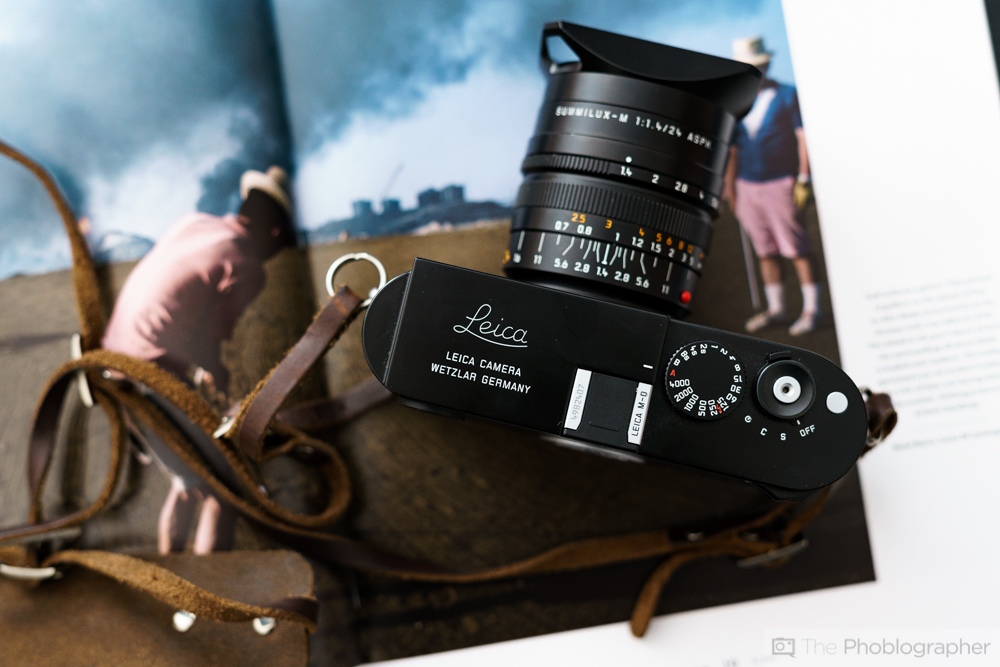
There is a quiet rebellion happening in the way we choose what to keep, and the Leica MD stands as its most elegant proof point. For years, the chorus of critics dismissed Leica as an overpriced relic, a brand coasting on nostalgia while cheaper rivals churned out faster specs and longer warranties. But that critique misses the entire point of what a camera should be. The MD, released in 2016, marks the moment Leica's digital craft became a lifelong companion, not because it was the most feature-packed body on the market, but because it was built to outlast the trends that make us replace everything every two years. As the writer behind this story reflects on approaching 40, the shift in mindset is one many of us feel: the growing exhaustion with disposability, the quiet desire for objects that age with us rather than against us. It is the same impulse that makes us mourn the end of the Mac Pro's run, a machine whose spirit lives on inside Apple’s new M5 Ultra Studio, and the same curiosity that leads us to decode the true lifespan of a Sony camera. These are not separate conversations; they are the same emerging philosophy.
The practical truth here is simple: Leica still services cameras that are over a decade old. That is not a footnote; it is the central argument. When a company commits to repairing a digital body from 2010, it transforms a purchase from a transaction into a relationship. The MD was the first Leica digital camera that felt designed for that kind of future, a stripped-down, screenless tool that forced you to slow down and trust the process. It was not trying to compete with the spec sheet of a Sony A7 series or a Fujifilm X-T2. Instead, it offered something rarer: the promise that you would never have to learn a new menu system or re-buy your lenses because the mount changed. For the creative professional or the devoted enthusiast, that permanence is the true luxury. We spend so much energy chasing the next iteration, but the MD asks us to consider what it means to finally arrive.
This is not a call to abandon practicality or to pretend that budget constraints do not exist. It is an invitation to reframe value. The journalists and influencers who scoffed at Leica's price tag were not wrong about the number; they were wrong about the math. A camera that works for a decade and can be repaired by the people who made it costs less per year of use than most flagship smartphones. The MD proved that digital photography could feel as permanent as a well-made watch or a tailored jacket. It aligned perfectly with the ethos of longevity that we see creeping into fashion, furniture, and even home security, where Apple reimagines what it means to see without recording, prioritizing privacy and trust over raw data accumulation. The thread is consistency: build something that respects the user's time and attention.
The specific takeaway for anyone reading this is to ask a different question before your next big purchase. Do not ask, "Does this have the most megapixels?" Ask instead, "Will this company still care about this product in ten years?" The Leica MD answered that question with a resounding yes in 2016, and the fact that we are still talking about it today is the only review that matters. The next time you look at a piece of technology, look for the repair policy, not the press release. That is where the real commitment lives.