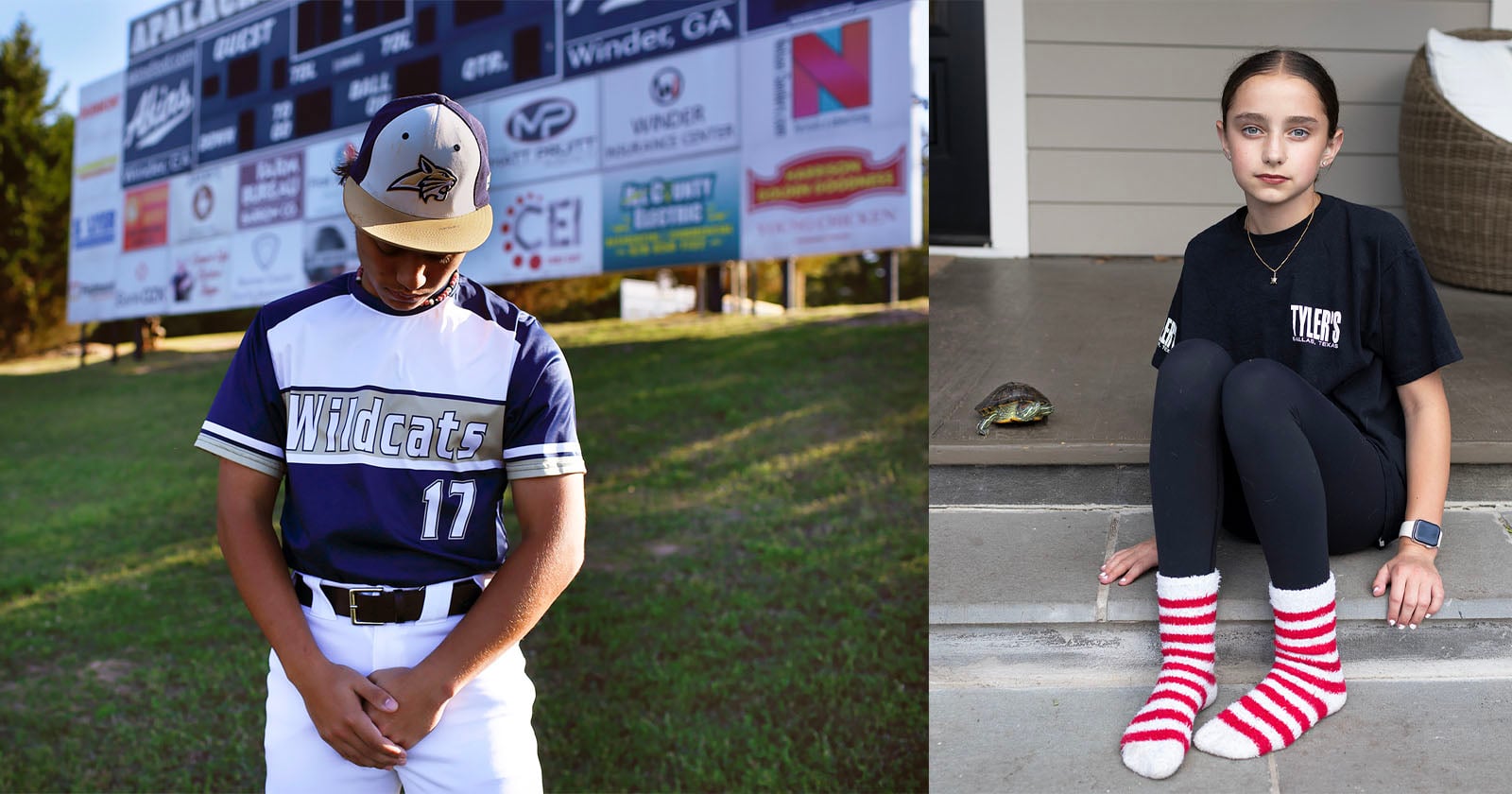
For thirteen years, Kathy Shorr has aimed her camera at a subject most of us would rather look away from, and the resulting portraits refuse to let us. Her work is not a statistic-laden report or a policy brief; it is a gallery of faces, each one permanently altered by gun violence in America. Our take is straightforward: this is photography doing what it does best, turning an overwhelming national crisis into something intimate, undeniable, and deeply human. In an era where we scroll past tragedy at speed, Shorr's practice demands we stop, look, and sit with the weight of what remains.
The slow, deliberate nature of her project feels almost radical. Over more than a decade, she has returned again and again to survivors and families, building a body of work that mirrors the way grief itself accumulates, not in a single dramatic moment but in the long, quiet years that follow. This approach resonates with the patience we see in early photographic practices like the The Art of Veiled Devotion: Uncovering the Hidden Mother in Early Photography, where the unseen presence in the frame is as important as the subject. Shorr's portraits similarly ask us to consider what is not immediately visible: the memory of a classroom, the sound of a bell, the absence that shapes a living room. And like the Fifty Years of Light: Portraits Frame Our Shifting National Mirror collection at the Smithsonian, her photographs function as a mirror, reflecting not just individual sorrow but the evolving character of a country that has learned to live with this particular form of loss.
What makes Shorr's work so potent is its refusal to sensationalize. There is no gore, no chaos, no dramatic reenactment. Instead, we see a baseball player in his uniform, a girl sitting with her turtle, ordinary people in ordinary settings who carry an extraordinary burden. This is the artistic choice that elevates the project from documentation to testimony. It aligns with the technical truth that sharpness alone does not make a photograph powerful; as we explored in Find the Sweet Spot Where Your Lens Delivers Its Sharpest Frame, clarity is a tool, not the message. Here, the clarity is emotional. By presenting these survivors in their daily lives, Shorr underscores that the aftermath of gun violence is not a headline; it is a lived reality, a permanent condition that those pictured must navigate every single day.
For our readers, the takeaway is a practical one about the power of sustained attention. In a culture that prizes the new and the immediate, Shorr's thirteen-year commitment is a lesson in the value of longevity. It reminds us that some stories cannot be told in a single frame or a single news cycle. They require the patience to return, the humility to listen, and the craft to translate that trust into images that will outlast the outrage. As you look at her portraits, consider the time each one represents. The concrete question her work leaves us with is not about policy or politics, but about our own willingness to bear witness. Will we, like Shorr, commit to looking for the years it takes to truly see?