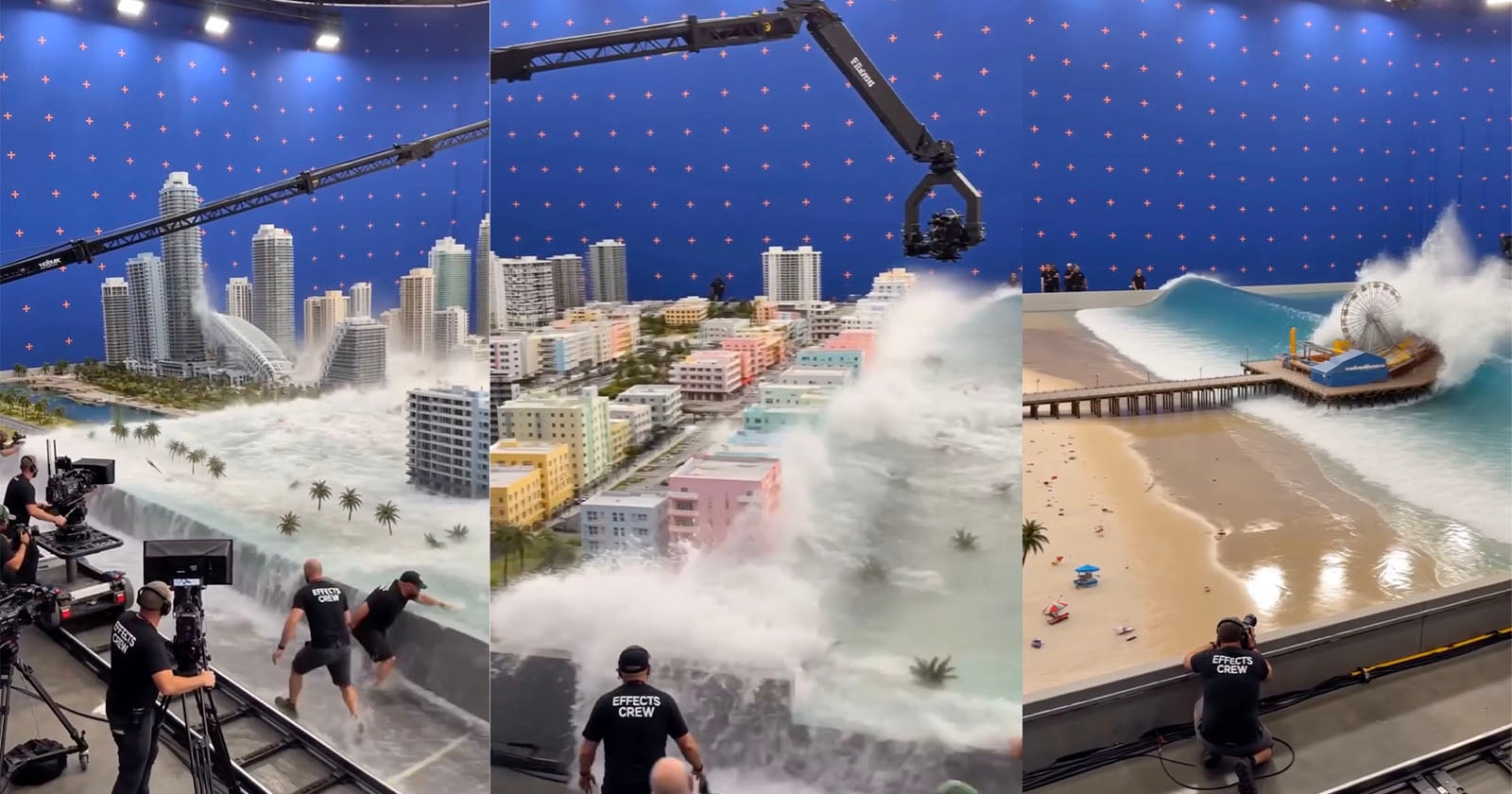
There is something almost poetic about watching a miniature city vanish beneath a towering wave, especially when the entire scene is a fabrication. The viral AI video of a fictional film crew capturing a flooded Miami is a strange, beautiful paradox. It feels like a memory of a movie we have never seen, a disaster rendered in perfect miniature, and yet it arrives with a question attached: why is Meta pushing this so hard? We are not asking because we are suspicious of spectacle. We are asking because the spectacle is the point, and we want to know who is curating this particular moment of awe.
For our readers, who move between the worlds of visual artistry and authentic lifestyle, this is not a distant tech story. It is a mirror held up to the way we all engage with imagery. We recently explored how Curate Your Aesthetic: Seamlessly Integrate Tagged Posts to Your Grid allows creators to shape their digital presence with intention. That tool is about control, about choosing what appears in your grid. But this AI wave crashes in and reminds us that the algorithm is also curating, pushing content not because it is true, but because it is immersive. It is a different kind of collaboration, one where the human is the audience, not the author. And yet, there is a strange kinship between the two: both are about assembling fragments into a compelling whole, whether it is a tagged post or a fictional disaster.
The debate over Meta's role here feels less like a scandal and more like a natural evolution of the creative process. We have spent years championing the idea that art is not bound by reality, that a photographer can stage a scene to evoke a deeper truth. Consider the stories we tell about real events, like the harrowing A Descent Into Darkness: Witnessing the Chilean Mine Rescue, where the world watched a real struggle unfold in real time. That story moved us because it was authentic, because the stakes were human. Now we have a video that simulates a disaster with a fictional crew, and it is moving millions. The contrast is telling. We crave the emotional resonance of a crisis, but we are increasingly comfortable receiving it as pure fiction, as long as it is beautiful.
Our honest take is this: the discomfort is not about the AI itself, but about the blurring of the boundary between documentation and daydream. For every creator who uses these tools to push their own boundaries, there is a platform deciding what deserves millions of views. We would tell a reader who asks about this to watch the video, enjoy the craft, but then ask a simple question: what is this selling you? It is not selling a product. It is selling a feeling, a sense of scale, a thrill of catastrophe without the mess. That is potent stuff. The practical takeaway is to be a deliberate curator of your own feed, just as you would curate a boudoir session or a portfolio, because the algorithm is not your collaborator. It is a film crew of its own, and you are not the director. The specific detail to watch is how Meta responds to the criticism; whether it flags this content as AI-generated or lets it ride the wave of engagement. That choice will tell you more about the platform's values than any policy statement.