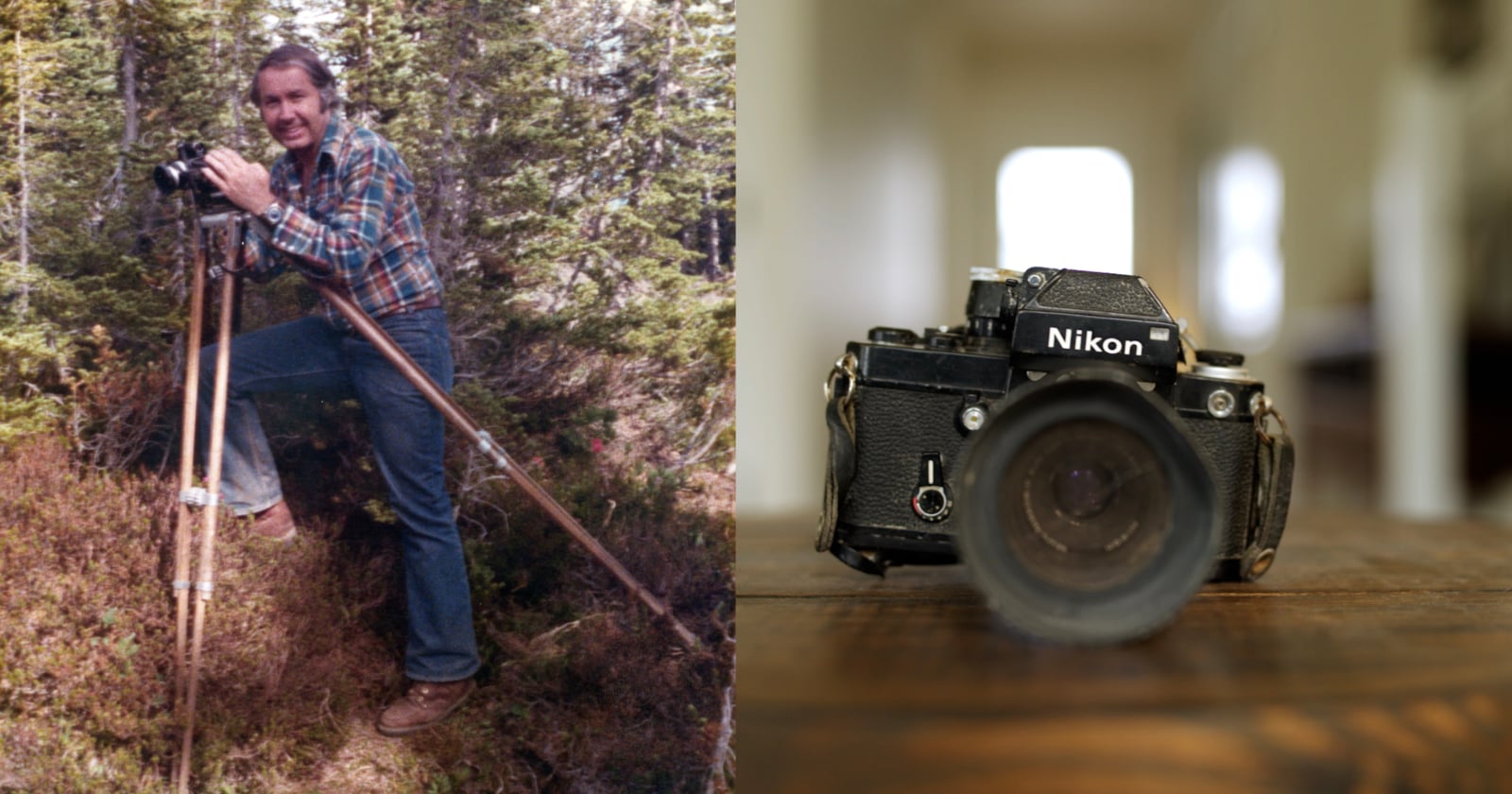
There is something profoundly unsettling about the story of Robert Landsburg, and it has nothing to do with the ash cloud that killed him. The photographer, who died shielding his camera during the 1980 eruption of Mount St. Helens, understood something that our current age of endless, disposable content has nearly erased: some images are worth dying for. It is a stark, uncomfortable truth, but one worth sitting with. Landsburg did not simply take a photograph; he curated his own final frame, ensuring the film survived even as he did not. That act reframes what it means to capture a moment, and it asks us to consider what we are actually preserving when we point a lens at the world.
This is not a story about a heroic sacrifice in the abstract. It is a practical lesson in intention. Landsburg's final images were not random snapshots of a disaster; they were the last piece of a visual record he believed mattered more than his own safety. In a culture where we routinely snap hundreds of photos of a single meal or a sunset, his choice feels almost alien. Yet it is precisely this kind of deliberate, curated focus that separates art from noise. We recently explored how Sony's Sony's LYTIA 720 Captures Light and Detail With 50 Megapixels of Depth sensor pushes the boundaries of what a camera can technically see, but technology alone cannot teach a photographer when to put the camera down, or when to hold it tighter. Meanwhile, the revival of A Curated Return: Life Magazine Revives Its Lens on the World reminds us that the medium's power has always been in selection, not volume. Landsburg made the ultimate selection: he chose which frames mattered.
Our opinion is simple: we need more of that clarity, even if we never face a volcano. The practical takeaway for anyone holding a camera today is not to romanticize danger, but to interrogate urgency. Ask yourself, before you press the shutter, what exactly you are trying to preserve. Is it the event, or is it your own presence at the event? Landsburg's story strips away the vanity of the photographer and leaves only the responsibility of the witness. He did not post the eruption; he preserved it. That distinction matters, especially now, when the line between documenting a moment and performing for an audience has blurred into near invisibility. We saw this tension play out in a very different context recently, when a photographer was physically interrupted during the Ballon d'Or ceremony in When Art Meets Interruption: A Photographer's Ballon d'Or Moment, a jarring reminder that even the most glamorous settings can disrupt the act of seeing. Landsburg's interruption was absolute, and he chose the frame over the escape.
The concrete detail to watch is not the ash, but the film. Landsburg's roll survived because he wrapped his body around it. Today, our images live in the cloud, backed up, duplicated, and infinitely retrievable. That abundance has made us careless with what we choose to shoot. The question his story leaves us with is not whether we would die for a photograph, but whether we are living for the right ones.