No More Than 100,000 Satellites in the Sky if We Want to Preserve Astronomy
Our take
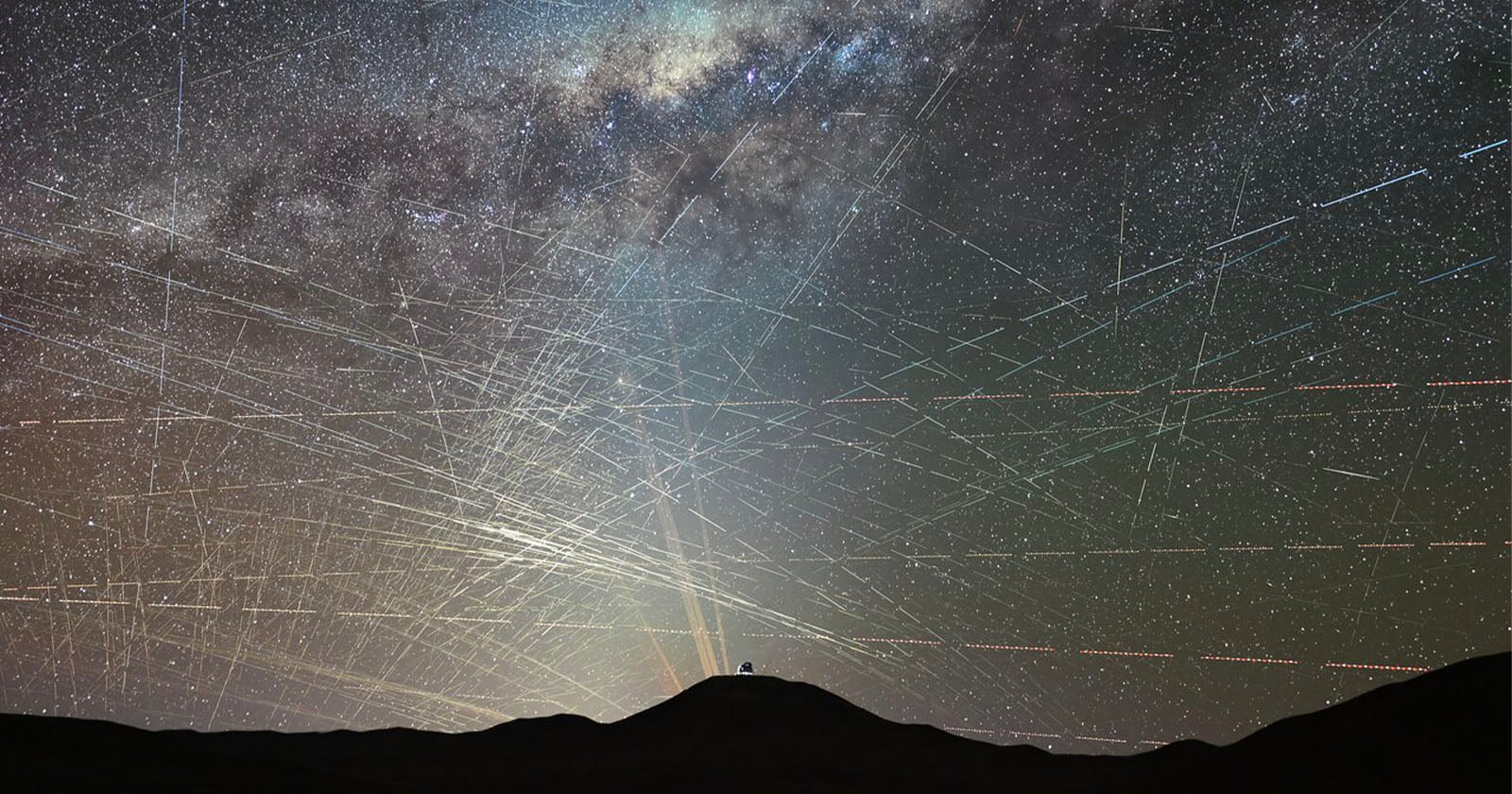
The cosmos, once a boundless canvas of wonder, is facing an unprecedented challenge – a potential deluge of satellites threatening to obscure our view of the universe. Recent reports, echoing the concerns of astronomers like those highlighted in Researchers Used Two Telescopes to Discover a Planet Hidden In Plain Sight, underscore the fragility of our astronomical pursuits in the face of rapidly expanding commercial space endeavors. The proposed deployment of 1.7 million satellites – a staggering figure – poses a serious threat to both professional and amateur astronomers, potentially transforming the night sky into a cluttered, artificial landscape. This isn’t simply about aesthetics; it’s about preserving our ability to understand the fundamental building blocks of the universe, a pursuit that has driven human curiosity for millennia. The sheer scale of this projected proliferation, coupled with the reported brightness of some of these satellites, risks rendering vast swathes of the sky unusable for observation, fundamentally altering our relationship with the cosmos. It’s a scenario that demands careful consideration and proactive measures, especially given recent approvals like the one detailed in US Approves Gigantic Satellite Mirror That Will Illuminate the Earth at Night, which further complicates the issue of light pollution in space.
The core of the problem lies in the tension between technological advancement and the preservation of scientific inquiry. While satellite constellations promise transformative improvements in global connectivity and data transfer, their impact on astronomy is undeniable. These satellites, particularly the newer, lower-orbit models, reflect sunlight, creating streaks of light that contaminate astronomical images and interfere with sensitive observations. The cumulative effect of millions of these objects, even when not directly in the field of view, can introduce subtle but pervasive noise that degrades data quality and limits the scope of scientific discovery. The need for dark skies isn't merely a quaint desire for romantic stargazing—it's a vital prerequisite for unlocking the secrets of distant galaxies, probing the origins of the universe, and identifying potentially hazardous asteroids. As NASA’s Psyche spacecraft demonstrates in its stunning month-long timelapse of Mars NASA’s Psyche Spacecraft Captures Mind-Bending Month-Long Timelapse of Mars, our ability to observe celestial bodies relies on pristine conditions, something increasingly difficult to achieve in an era of rapid space commercialization.
The call for a limit of 100,000 satellites, while ambitious, represents a crucial step towards mitigating the damage. It’s a recognition that unfettered expansion comes at a cost – a cost that could severely compromise humanity’s ability to explore and understand the universe. Solutions are not necessarily about halting satellite deployment altogether, but rather about implementing responsible design practices, such as darkening satellite surfaces and employing orbital management techniques to minimize interference. International collaboration and regulatory frameworks are essential to ensure that space remains a resource for all, not just a playground for commercial interests. The challenge requires a delicate balance—fostering innovation while safeguarding the invaluable opportunity to unravel the mysteries of the cosmos. It necessitates a shift in perspective, one that acknowledges the intrinsic value of dark skies as a scientific asset and a cultural heritage.
Looking ahead, the question becomes: how can we reconcile the demands of a rapidly evolving technological landscape with the imperative to preserve the integrity of astronomical observation? The development of adaptive optics and advanced data processing techniques offers some hope, but these are partial solutions at best. Ultimately, a proactive and collaborative approach, involving astronomers, satellite operators, and policymakers, is crucial to ensuring that future generations can continue to gaze upon the stars with wonder and insight, rather than a veil of artificial light. Will humanity prioritize the long-term benefits of astronomical discovery over the short-term gains of ubiquitous connectivity, or will the night sky become another casualty of unchecked technological progress?
An astronomer claims that existing proposals for 1.7 million satellites, including incredibly bright ones, will have "devastating consequences" for humanity's view of the Universe.
Read on the original site
Open the publisher's page for the full experience